How to check available RAM on your phone?
Last updated: 2026-09-04
Welcome to Blackview (World's well-known brand of rugged phone) blog. Hope the guide helps.
Knowing how much RAM is available on your phone can help you understand whether the device has enough memory for the apps and tasks you use every day. RAM, or Random Access Memory, is temporary working memory that the operating system and apps use while they are running. When available RAM becomes limited, you may notice apps reloading frequently, slower multitasking, or reduced overall responsiveness. Checking RAM usage is therefore a useful troubleshooting step when your phone does not seem to perform as smoothly as it once did.

- Read also: How to clean a clear phone case that turned yellow?
- I dropped my phone, how can I know if there is internal damage?
- How to hide and unhide your WiFi network?
The method for checking available RAM depends significantly on whether you are using an Android phone or an iPhone. Android devices often provide RAM information directly through Settings, Developer Options, or device-maintenance tools, although the exact menu names vary by manufacturer. iPhones handle memory differently and generally do not display a simple “available RAM” figure in the standard Settings app. However, you can still identify your iPhone model, determine its installed RAM from reliable technical specifications, and use performance indicators to understand how memory is being handled.
How to check available RAM on an Android phone
Many Android phones provide a built-in way to see RAM capacity and current memory usage. The exact procedure can differ between Samsung Galaxy, Google Pixel, Xiaomi, OnePlus, Motorola, and other Android devices, but the following methods cover the most common approaches.
Method 1: Check RAM in Settings
On some Android phones, RAM information is available directly in the device information or memory section.
- Open the Settings app.
- Search for RAM, Memory, or Device information using the Settings search function.
- Open the relevant Memory or RAM section if your phone provides one.
- Check the displayed total RAM and the amount currently being used.
- Subtract the used amount from the total if you want to estimate the currently available memory.
Some manufacturers place this information under Device Care, Battery and device care, or a similar system-management menu. If you cannot find it, searching for “memory” in Settings is often the quickest option.
Method 2: Use Developer Options
If your Android phone does not show detailed RAM information in its normal Settings menus, Developer Options may provide more detailed memory statistics.
- Open Settings and find About phone.
- Locate Build number.
- Tap Build number repeatedly until Android confirms that Developer Options have been enabled. You may need to enter your screen-lock PIN or password.
- Return to Settings and open Developer options.
- Find the Memory section.
- Review the average memory usage, total memory, and available memory shown by your device.
The terminology and location can vary between Android versions. Developer Options contains advanced settings, so avoid changing options you do not understand simply to inspect the RAM information.
How to check RAM on an iPhone
iOS does not normally provide an Android-style RAM monitor in the standard Settings application. This is partly because Apple manages memory automatically and does not generally require users to manually clear or optimize RAM. If you want to know how much RAM your iPhone has, the most practical approach is to identify the exact iPhone model and check its technical specifications from a reliable source.
Method 1: Identify your iPhone model
First determine the exact model of your iPhone.
- Open Settings.
- Tap General.
- Select About.
- Look for Model Name and Model Number.
- Record the exact model information.
- Use the model information to find the device's RAM specification from a reliable technical reference.
This method is preferable to relying on random memory-monitoring apps because iOS does not expose all system memory information to ordinary applications in the same way Android does.
Method 2: Use an iPhone system-information app
Some third-party apps available through the App Store can display hardware information, including memory-related statistics. Their access to iOS system information can be more limited than comparable Android tools, so the displayed figures may not always represent the same type of “available RAM” measurement used by Android.
- Open the App Store.
- Search for a reputable iPhone system-information or device-specification app.
- Install the app and open it.
- Review the available memory or hardware information it provides.
- Compare the result with specifications for your exact iPhone model if the figure seems unclear.
For most users, knowing the installed RAM is more useful than constantly monitoring free RAM because iOS dynamically manages memory and can reclaim resources when necessary.
What is the difference between RAM and storage?
RAM and storage are two different types of memory. RAM is temporary working space used by the operating system and running applications. Storage is the permanent space used for photos, videos, apps, documents, messages, and other files. A phone advertised as having 8 GB of RAM does not mean it has only 8 GB of storage.
Does more available RAM mean a faster phone?
Not necessarily. Available RAM is only one factor affecting performance. Modern operating systems intentionally use RAM to keep frequently accessed apps and services ready, so a phone showing substantial RAM usage is not automatically experiencing a problem. Processor performance, storage speed, software optimization, thermal conditions, and the efficiency of individual apps can all influence how fast a phone feels. Related: How much RAM is good for a phone?
Should you clear RAM manually?
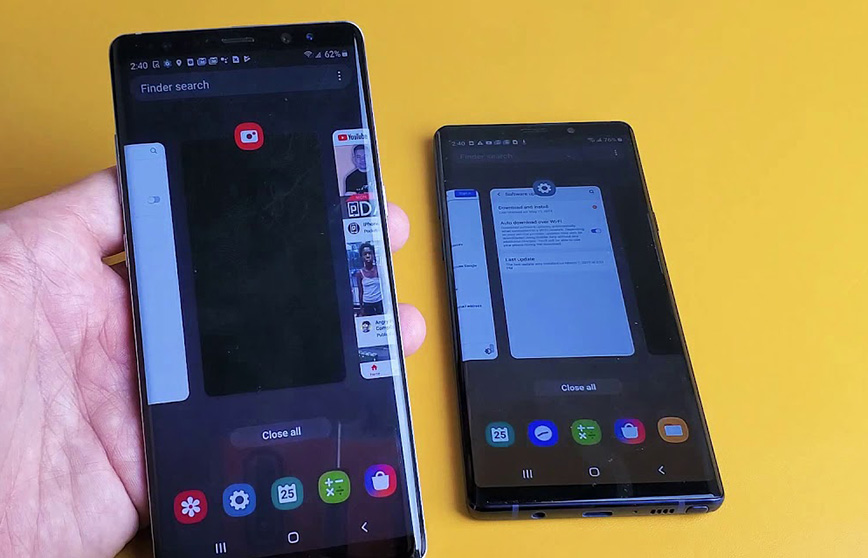
In most cases, manually clearing RAM is unnecessary. Android and iOS are designed to manage memory automatically. Force-closing every application can sometimes make the experience less efficient because frequently used apps have to reload from scratch. If one particular app repeatedly freezes or behaves abnormally, closing and reopening that app may help, but constantly cleaning RAM is not usually a useful maintenance habit.
What can you do if your phone keeps running out of memory?
If your phone frequently becomes sluggish or apps repeatedly reload, first identify whether the issue is RAM pressure or insufficient storage. Remove unnecessary apps, delete large files, update the operating system, and restart the phone when appropriate. If one particular application consistently consumes excessive memory, check whether it has an available update or consider reinstalling it after protecting any important data.
When should you be concerned about RAM usage?
High RAM usage alone is not necessarily a warning sign. It becomes more relevant when it is accompanied by persistent app crashes, severe slowdowns, frequent reloads, overheating, or other unusual behavior. On Android, the Memory section can help identify which applications are consuming significant resources. On iPhone, repeated performance problems should be assessed together with available storage, battery condition, software version, and the behavior of individual apps rather than focusing exclusively on a free-RAM number.
Ultimately, checking available RAM is easier on Android because many devices expose memory statistics directly through Settings or Developer Options. On iPhone, Apple takes a more automated approach, so identifying the model and checking its published hardware specifications is usually the most practical way to determine installed RAM. In both cases, remember that free RAM is not a direct measurement of overall phone performance.
For everyday maintenance, focus on the symptoms your phone actually shows rather than trying to keep a particular amount of RAM permanently free. Keeping the operating system and apps updated, maintaining adequate storage space, and investigating apps that repeatedly consume excessive resources will generally do more for long-term performance than repeatedly clearing memory.