How to keep your phone screen from rotating?
Last updated: 2026-09-28
Welcome to Blackview (Well-known brand of rugged phone and tablet) blog. Hope the guide helps.
Automatic screen rotation is convenient when you want to switch between portrait and landscape views, but it can become frustrating when the display keeps changing orientation while you are lying down, reading, browsing, or using an app at an unusual angle. Fortunately, both Android phones and iPhones provide built-in controls that let you lock the screen in portrait orientation and prevent unwanted rotation.
The exact procedure depends on your device and operating-system version, but the basic solution is to turn off automatic rotation or enable the orientation lock. Once enabled, the phone will normally keep the screen in portrait mode even when you physically turn the device. You can temporarily disable the lock whenever you need landscape mode for videos, games, maps, or other applications.
- Read also: How to hide videos on Android?
- How to download movies on my phone?
- How to download music on Android?
- How to restart phone without power button?
How to stop your Android phone screen from rotating
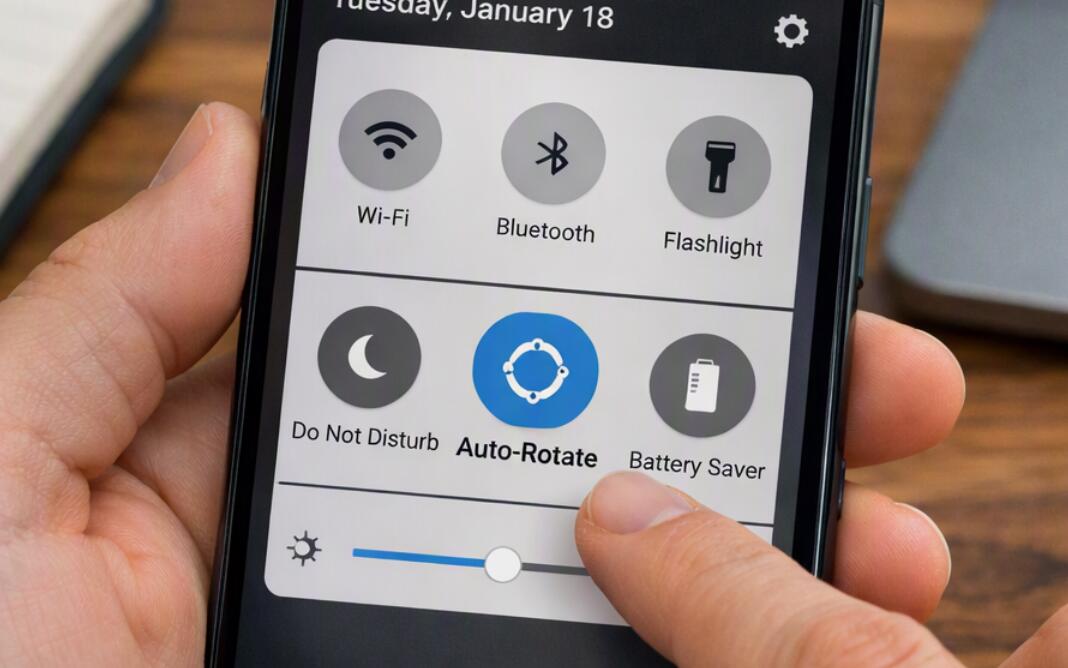
Most modern Android phones include a screen-rotation control in the Quick Settings panel. Depending on the manufacturer, the feature may be called Auto-rotate, Portrait, or something similar. The easiest method is to use the shortcut rather than searching through the full Settings menu.
Steps to lock Android screen orientation
- Unlock your Android phone.
- Swipe down from the top of the screen to open the Quick Settings panel.
- Swipe down again if necessary to see more controls.
- Look for Auto-rotate, Portrait, or an orientation-related button.
- Tap the control to turn automatic rotation off.
- If the button changes to Portrait, the phone is now locked to portrait orientation.
- Turn the phone sideways to confirm that the screen remains upright.
On some Android devices, you can also change the setting through Settings. Open Settings and search for terms such as Auto-rotate, Screen rotation, or Orientation. The location varies between manufacturers and Android versions, so using the Settings search function can be faster than manually browsing through menus.
How to keep an iPhone screen from rotating
On an iPhone, the equivalent feature is called Portrait Orientation Lock. It prevents supported apps from automatically switching between portrait and landscape orientations. You can enable it from Control Center without changing any permanent display settings.
Steps to turn on Portrait Orientation Lock
- Unlock your iPhone or wake the screen.
- Open Control Center. On newer iPhones, swipe down from the top-right corner. On iPhones with a Home button, swipe up from the bottom.
- Find the button showing a padlock surrounded by a circular arrow.
- Tap the button to enable Portrait Orientation Lock.
- Close Control Center and return to the app you were using.
- Rotate the phone sideways and check whether the display remains in portrait orientation.
When you want the screen to rotate again, open Control Center and tap the same orientation-lock button to turn it off. The change takes effect immediately, so you can switch between locked and automatic orientation whenever needed.
Why does my phone keep rotating even when I do not want it to?
Automatic rotation is controlled by motion sensors inside the phone. These sensors detect how the device is positioned and tell the operating system when the display should change orientation. If automatic rotation is enabled, simply tilting the phone can cause the screen to switch. This can be especially noticeable when reading in bed or using the phone while reclining.
Common situations that cause unwanted rotation
Several everyday situations can make automatic rotation feel more intrusive than useful:
- Holding the phone at an angle while reading.
- Using the phone while lying on a sofa or in bed.
- Turning the phone slightly while watching content.
- Moving between portrait and landscape positions frequently.
- Using applications that automatically respond to orientation changes.
Turning on the orientation lock prevents most of these accidental changes. However, the lock does not necessarily force every application to display in portrait mode. Some apps have their own orientation behavior, and certain applications may only support a particular orientation.
What to do if screen rotation is not working correctly
If the screen continues rotating after you believe the orientation lock is enabled, first check whether the lock actually appears active. A shortcut may have been switched accidentally, particularly if you frequently open the Quick Settings panel or Control Center.
Check the orientation setting
Open the relevant control panel again and verify that Auto-rotate is disabled on Android or Portrait Orientation Lock is enabled on iPhone. If the setting appears correct but the behavior is unchanged, close and reopen the application you are using.
Restart the phone
A simple restart can resolve temporary software problems affecting system controls or sensors. Restart the phone normally, then check the orientation-lock setting again after it boots.
Update the operating system
If rotation problems persist across multiple applications, check whether your phone has an available operating-system update. Software updates can address bugs involving system controls, sensors, and individual applications. It is also worth updating an app if the rotation problem occurs only inside that particular app.
How to manage rotation when watching videos
Screen rotation can be useful for video playback because many video services use landscape mode to provide a larger viewing area. If you normally keep portrait orientation locked, you may need to temporarily disable the lock when watching a video.
On an iPhone, open Control Center and turn off Portrait Orientation Lock before rotating the phone. On Android, turn Auto-rotate back on before switching to landscape mode. After you finish watching the video, you can restore the orientation lock so other apps remain in portrait mode.
Can individual apps override the screen orientation?
Yes. Orientation behavior can depend on the application. Some apps are designed primarily for portrait mode, while others are optimized for landscape mode. Certain games, streaming applications, camera tools, and productivity apps may change orientation automatically or provide their own orientation controls.
If only one application behaves differently while the rest of your phone stays locked correctly, the issue may be related to that app rather than the phone's global rotation setting. Check the application's settings or support documentation for an orientation option.
How to prevent accidental rotation in everyday use
The most convenient solution for people who prefer portrait mode is to keep the system-wide orientation lock enabled and switch it off only when landscape mode is genuinely useful. This avoids repeatedly fighting with the motion sensors while reading, messaging, browsing, or checking notifications.
- Keep Portrait Orientation Lock enabled on iPhone if you primarily use portrait mode.
- Keep Android's Auto-rotate disabled when you want a fixed display orientation.
- Temporarily unlock rotation for videos, games, and landscape applications.
- Check individual app settings if only one application behaves unexpectedly.
- Restart and update the phone if rotation controls stop responding normally.
Using the orientation lock does not disable the phone's motion sensors; it simply prevents the operating system from automatically changing the display orientation in response to those movements. This makes it a practical everyday setting rather than a troubleshooting workaround.
Final considerations
Keeping your phone screen from rotating is usually a matter of enabling the correct orientation lock. Android users can generally disable Auto-rotate through Quick Settings, while iPhone users can enable Portrait Orientation Lock through Control Center. Once the lock is active, the display should remain in portrait orientation during normal use, even when the phone is turned sideways.
If the screen still rotates unexpectedly, verify the orientation setting, restart the device, and check for operating-system or application updates. Remember that some apps have independent orientation behavior, so a particular application may not respond exactly like the rest of the phone. For everyday use, leaving orientation locked and temporarily unlocking it only when landscape mode is needed provides a simple way to keep the display stable.